Shade netting, shade cloth, and aquaculture shading systems are increasingly used in Babylonia areolata farming to reduce excessive sunlight and heat stress caused by climate variability.
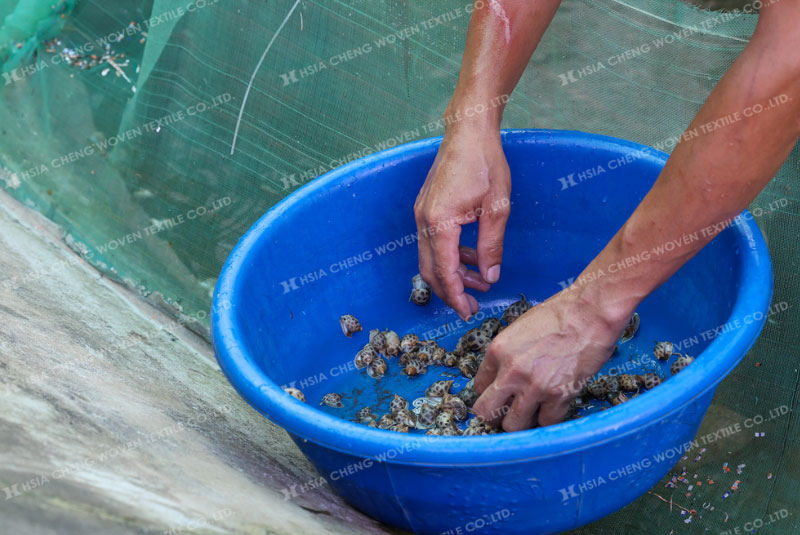
Babylonia areolata, commonly known as the spotted Babylon snail, is a high-value aquaculture species widely farmed in coastal areas, but it is also highly sensitive to changes in water temperature and pond conditions. During prolonged hot weather, direct sunlight can quickly raise pond temperature, lower dissolved oxygen levels, and negatively affect feeding activity, growth performance, and survival rates. As climate variability becomes more severe, effective shading solutions such as woven shade netting are becoming increasingly important for maintaining more stable pond environments.
Why Stable Pond Conditions Matter in Babylonia Areolata Farming
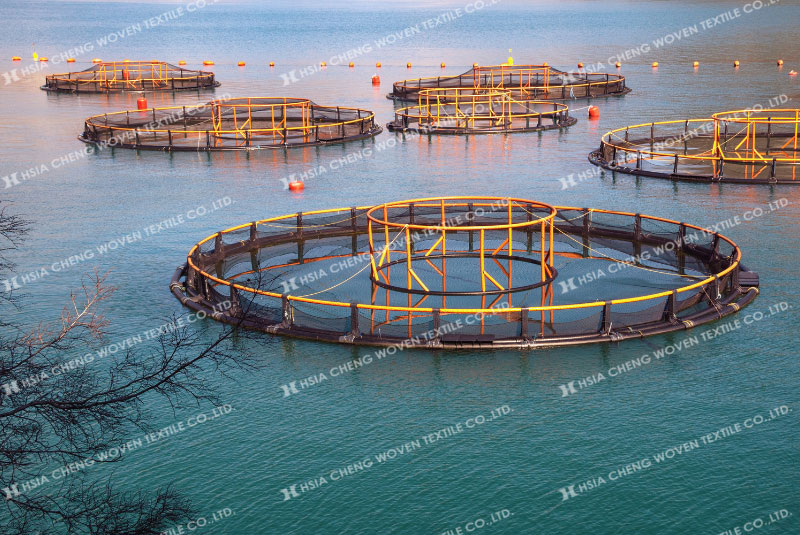
Current Status of Coastal Babylonia Areolata Farming
Babylonia areolata is commonly farmed in coastal ponds where water quality, salinity, and pond bottom conditions must be managed carefully. Under climate variability, these factors become less stable and more difficult to control, increasing the importance of practical pond shading solutions.
Impact of Hot Weather on Babylonia Areolata Ponds
Under favorable weather conditions, Babylonia areolata grows rapidly, feeds actively, and reaches market size within a relatively short time. However, during peak hot seasons—especially under prolonged heat stress caused by climate variability—pond conditions can become increasingly difficult to control.
Rising water temperatures, strong evaporation, salinity fluctuations, and reduced dissolved oxygen levels place snails under severe stress. In shallow coastal ponds with limited shading, pond surface temperatures can increase rapidly under direct sunlight, disrupting feeding activity, slowing growth, and increasing the risk of survival loss.
Effects of Sunlight and Temperature on Babylonia Areolata Ponds
Direct Sunlight Increases Pond Water Temperature
Prolonged direct sunlight exposure causes rapid increases in pond water temperature, particularly during midday and early afternoon. When temperatures exceed optimal thresholds, Babylonia areolata reduces activity, feeds less, and burrows deeper into the pond bottom to avoid heat.
This reduces feed efficiency, slows the farming cycle, and increases production risk throughout the season.
High Temperatures Trigger Algal Blooms and Water Quality Fluctuations
Elevated temperatures, which are increasingly common under climate variability, can accelerate algal growth in Babylonia areolata ponds. Excessive algae make water quality harder to control and can cause wider pH fluctuations between day and night. This imbalance may also contribute to dissolved oxygen stress near the pond bottom, weakening snails and reducing feeding activity.
Effects of Overheated Pond Bottom on Snail Health and Survival
The pond bottom is the primary living zone of Babylonia areolata, so excessive heat at the sediment level can directly affect health and survival. Prolonged bottom heating may worsen living conditions, encourage toxic gas accumulation, and increase disease risk. Because this species spends much of its time near or within the pond bottom, effective shading plays an important role in maintaining a more suitable habitat.
Pond Shading Solutions for Babylonia Areolata Farming
How Shade Cloth Helps Stabilize Pond Temperature
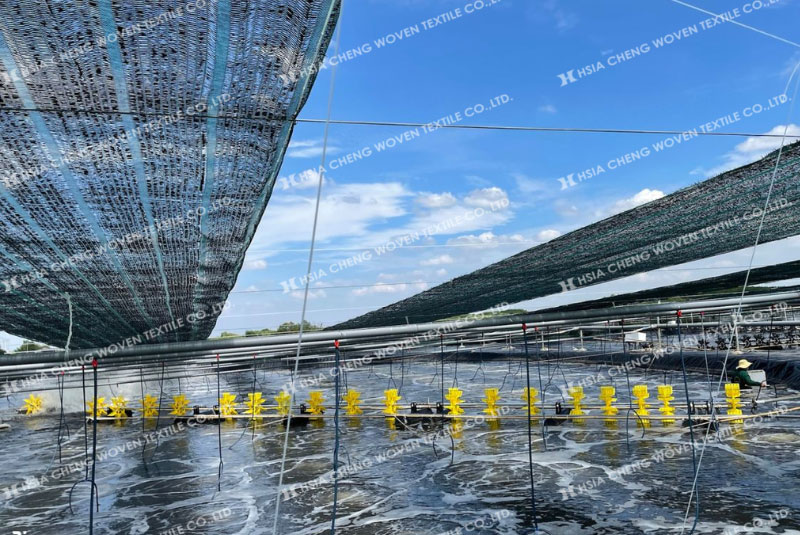
Shade netting provide simple yet highly effective solutions for protecting Babylonia areolata ponds from excessive sunlight and heat stress. When properly installed, they reduce direct solar radiation on the pond surface, preventing rapid heating of both water and pond bottom.
As a result, pond temperatures remain more stable throughout the day, creating more favorable conditions for feeding activity and healthy growth.
Diffusing Natural Light to Create a Suitable Living Environment
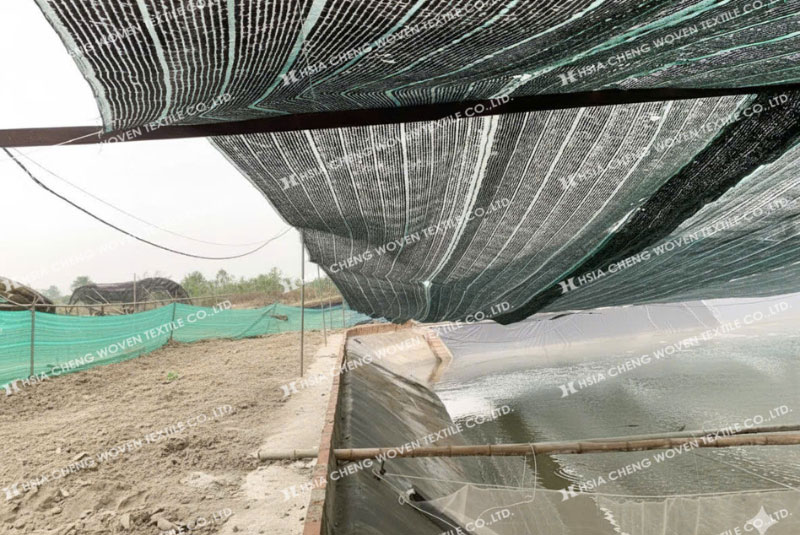
Unlike fully enclosed covers, shade netting allow natural light to be evenly diffused across the pond. This helps reduce localized heat buildup and sudden thermal stress while still maintaining a usable level of natural light for the pond ecosystem. Proper shading can also help limit excessive algal growth and support more stable water conditions for bottom-dwelling Babylonia areolata.
Benefits of Using Shade Netting and Shade Cloth in Babylonia Areolata Farming
Reducing Stress and Improving Feeding Activity
By lowering light intensity and stabilizing water temperature, shade cloth significantly reduce stress in Babylonia areolata. Under more stable conditions, snails tend to remain more active, feed more consistently, and utilize feed more efficiently. This can support better growth performance and reduce unnecessary feed waste on the pond bottom.
Controlling Algal Growth and Stabilizing Water Quality
Proper shading helps limit excessive sunlight penetration, which can reduce the risk of uncontrolled algal growth. More balanced algae levels make water conditions easier to manage and may help reduce large pH and dissolved oxygen fluctuations over the farming cycle.
Keeping the Pond Bottom Cool for Uniform Growth
Since Babylonia areolata lives primarily on the pond bottom, maintaining stable bottom temperatures is critical. Shade netting prevent direct sunlight from overheating the sediment, keeping the pond bottom cool and stable.
Improved conditions promote uniform growth, reduce size variation, and enhance meat quality and commercial value at harvest.
Improving Economic Efficiency and Long-Term Sustainability
Over the long term, effective pond shading can help farmers reduce stress-related losses and improve environmental stability under prolonged heat and climate variability. Better pond conditions may also help lower some water management pressures and support more consistent production results.
How to Choose Shade Netting and Shade Cloth for Babylonia Areolata Ponds
Selecting the Appropriate Shade Rate
Shade rate is the most important factor when selecting shade netting or shade cloth. Practical experience shows that 50–70% shading is optimal—effectively reducing intense sunlight while maintaining sufficient natural light for pond ecosystems.
Prioritizing Durable, UV-Resistant Materials for Saline Environments
Farmers should prioritize shade netting or shade cloth made from PE or HDPE with strong UV resistance, suitable for long-term outdoor use in saline coastal environments. High-quality materials ensure durability, stability, and long service life under variable climate conditions.
Why Our Woven Shade Netting Is Suitable for Babylonia Areolata Ponds
In coastal aquaculture environments, stable shading performance depends heavily on material quality and structural durability. Our woven shade netting is designed for outdoor use under intense sunlight, saline exposure, and changing weather conditions, making it a practical option for Babylonia areolata pond shading.
Key Features of Our Woven Shade Netting
Our woven shade netting is manufactured from high-quality HDPE fibers with a strong, stable structure that resists deformation during long-term use. The net diffuses sunlight evenly, reducing harsh exposure while maintaining adequate natural light for pond ecosystems.
Excellent UV resistance extends service life, while reinforced woven edges prevent fraying and tearing, making it suitable for small- to large-scale Babylonia areolata ponds.
Benefits of Using Our Woven Shade Netting in Babylonia Areolata Farming
Available in shading rates from 50–90%, our woven shade netting allows farmers to choose options that suit different pond conditions and sunlight intensity levels. It helps reduce excessive heat buildup, supports more stable pond conditions, and can make environmental management more controllable during prolonged hot periods.
Suitable for Sustainable Babylonia Areolata Farming Models
Our woven shade netting is well suited to coastal Babylonia areolata ponds that require durable, stable, and easy-to-manage shading. Its practical installation and reliable outdoor performance make it a useful solution for farmers facing strong sunlight and variable weather conditions.
FAQ
What shade rate is best for Babylonia areolata ponds?
50–70% shade rate is commonly recommended to reduce heat stress while maintaining sufficient natural light for pond ecosystems.
Can woven shade netting withstand saline coastal environments?
High-quality HDPE woven shade netting with UV resistance performs well in saline aquaculture environments and offers long-term durability.
Does shade netting improve snail survival rates?
Yes. Stable pond temperatures and reduced sunlight exposure help improve feeding activity and overall survival rates.
How long does aquaculture shade netting last?
Depending on UV resistance and material quality, woven shade netting can last several years under outdoor farming conditions.
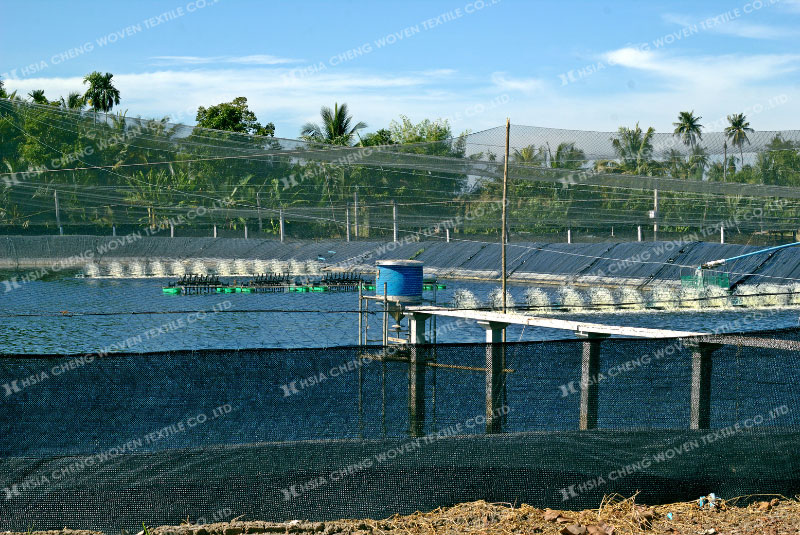
Improving Pond Stability Under Climate Variability
Stable pond conditions are increasingly important in Babylonia areolata farming as climate variability creates greater heat and water management challenges. Shade cloth and woven shade netting help reduce excessive sunlight, moderate pond temperature, and support a more suitable environment for healthy snail growth. For farmers looking for durable shading solutions in coastal aquaculture environments, our woven shade netting offers reliable UV resistance, stable outdoor performance, and practical long-term use.