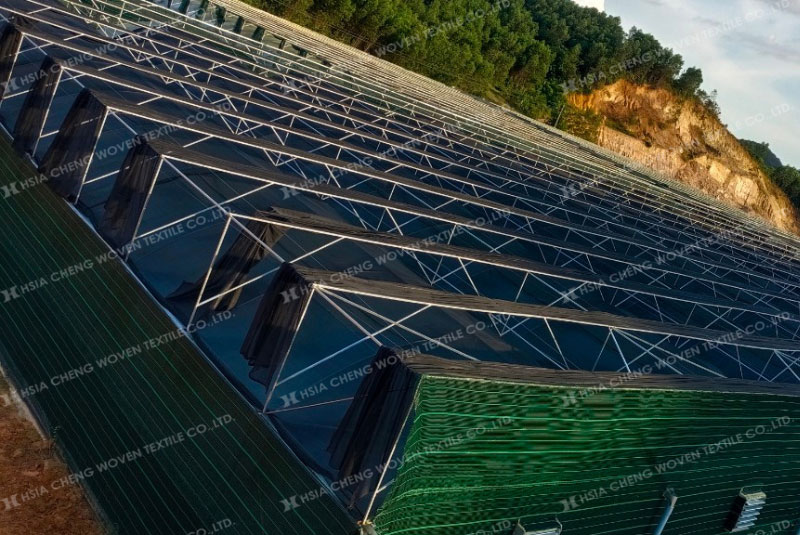
Greenhouses create a more protected growing environment, but they also accumulate heat quickly under strong sunlight. Once solar radiation passes through the covering material, internal temperatures can rise fast enough to affect crop growth, moisture balance, and overall greenhouse stability. A suitable shade cloth helps reduce heat load, soften excessive light, and support a more consistent climate, but the right choice depends on more than shade percentage alone. Greenhouse structure, crop sensitivity, installation method, and material durability all need to be considered together.
Why Greenhouse Shade Cloth Requires a More Targeted Selection
Shade netting for open growing areas and shade cloth for greenhouses do not serve exactly the same purpose. In greenhouse conditions, the main goal is not only to reduce direct sunlight, but also to limit heat build-up inside a semi-enclosed structure while preserving enough light for healthy plant development.
If the netting is too dense, crops may lose needed light. If it is too light, internal temperatures may remain too high during peak hours. This is why greenhouse shade cloth should be selected as part of an overall heat-reduction strategy rather than as a simple shading accessory.
A well-matched shading system can help:
- reduce midday heat stress
- improve temperature stability
- lower pressure on ventilation and cooling systems
- support more uniform crop growth
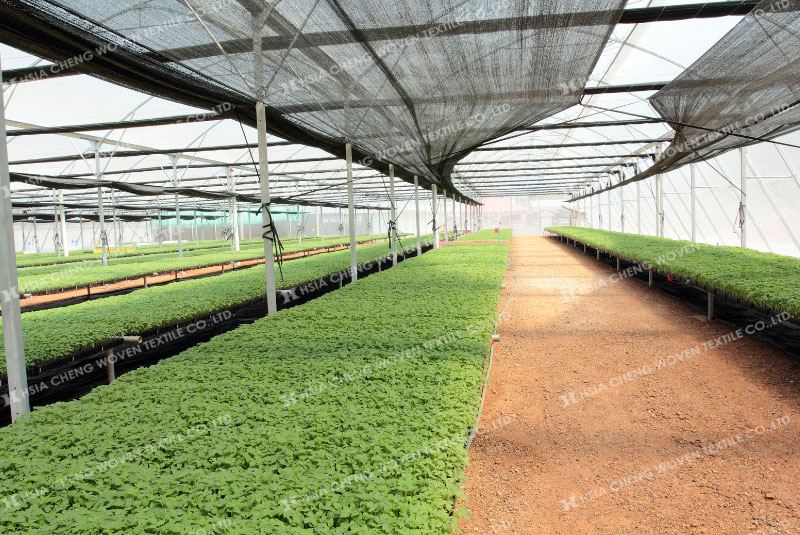
Four Key Factors Before Choosing Shade Cloth for a Greenhouse
A greenhouse shade cloth buying decision becomes clearer when the main conditions are defined first. Instead of choosing based only on product type or shade rate, it is better to review the factors that directly affect greenhouse performance.
Crop Light Sensitivity
Different crops respond differently to heat and light reduction. Some require strong light for active growth, while others are more vulnerable to leaf burn, dehydration, or stress during high-radiation periods. The shade cloth should reduce excess heat without creating unnecessary light deficiency.
Greenhouse Structure and Ventilation
Roof height, span width, side openings, vent design, and internal airflow all influence how heat behaves inside a greenhouse. A structure with limited ventilation often needs a more carefully balanced shading solution than one with strong natural or mechanical airflow.
Seasonal Climate Intensity
The right netting choice in a moderate climate may not perform the same way in a region with longer hot seasons, intense UV exposure, or repeated heat waves. Local radiation levels and seasonal temperature patterns should always be part of the selection process.
Installation Method
Inside and outside installation do not produce the same cooling effect. The position of the shade cloth changes how much solar energy is blocked, how exposed the netting is to weather, and how easy the system is to maintain over time.
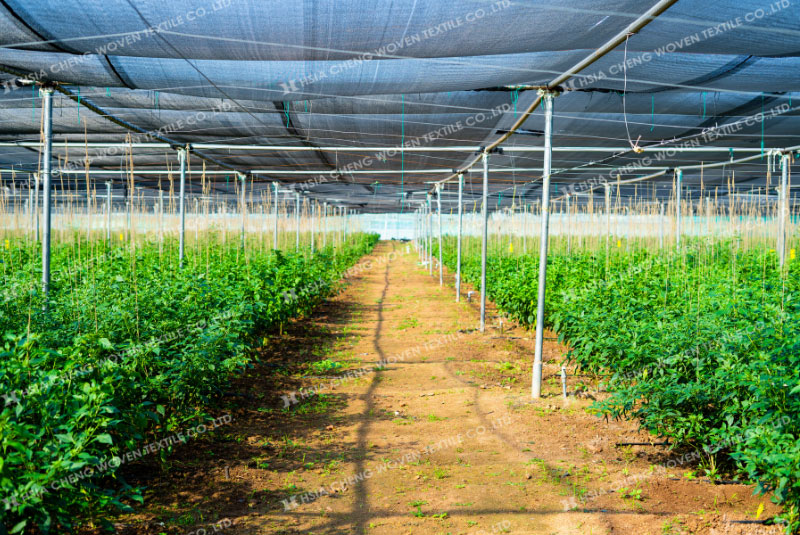
Inside vs Outside Installation
Installation position is one of the most important decisions in greenhouse shading because it affects both cooling efficiency and system durability.
Outside Installation for Stronger Heat Reduction
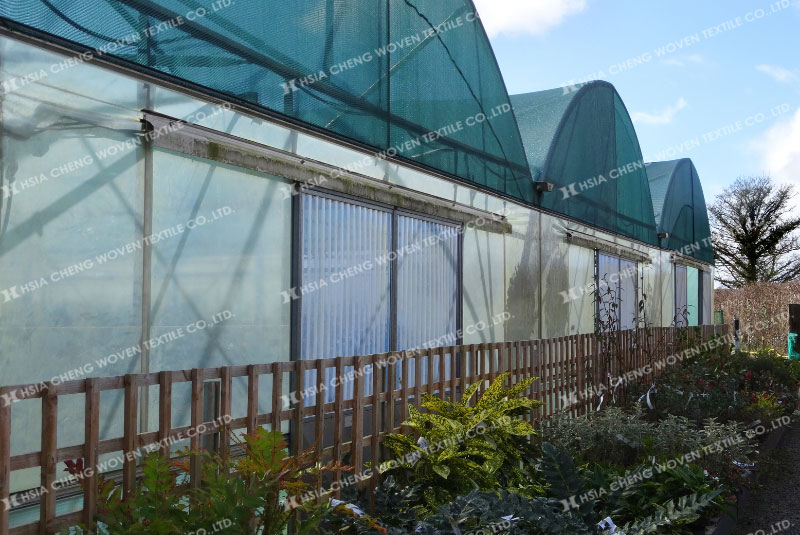
When shade cloth is installed outside the greenhouse, it blocks part of the solar radiation before it reaches the covering material. This usually provides better heat reduction because less heat enters the structure in the first place.
Outside installation is often more suitable when:
- solar radiation is strong
- summer overheating is severe
- internal cooling capacity is limited
- greater temperature reduction is needed during midday
Because the netting is directly exposed to sun, rain, and wind, the material must also provide dependable UV resistance and structural stability.
Inside Installation for Easier Management
Inside installation is often easier to maintain and protects the netting from direct weather exposure. It can be a practical option in greenhouses where heat pressure is moderate, where retractable operation is needed, or where easier service access is a priority.
The limitation is that some heat has already entered the greenhouse before the light is filtered. For this reason, inside installation is usually less effective than outside installation in reducing total solar heat gain.
The difference can be summarized clearly below
| Installation Position |
Main Advantage |
Main Limitation | Suitable Conditions |
| Outside the greenhouse |
Blocks solar heat before it enters |
Requires stronger weather resistance and secure fixing | High radiation, strong cooling demand, fixed external systems |
| Inside the greenhouse | Easier maintenance and better netting protection | Less efficient at stopping heat gain | Moderate climates, retractable systems, easier internal access |
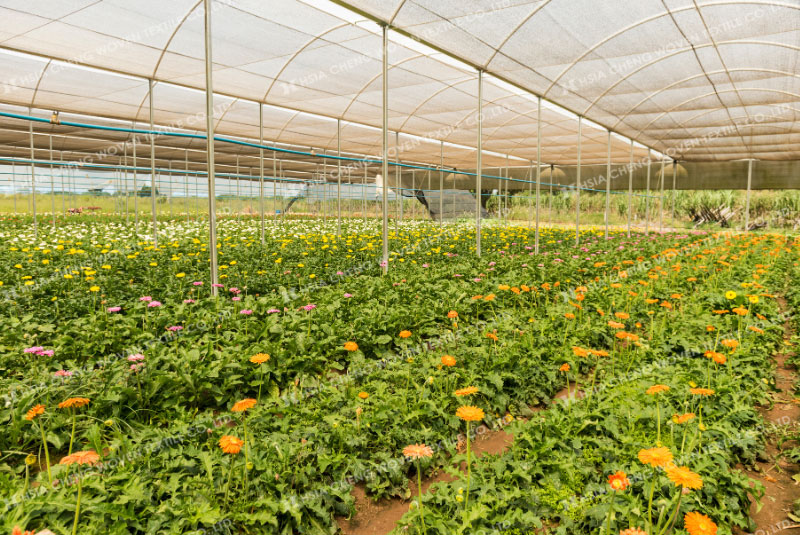
Woven Shade Netting and Mono Knitted Shade Cloth in Greenhouse Use
The choice between woven shade netting and mono knitted shade cloth should be based on how the greenhouse shading system will function in actual use.
Woven Shade Netting for Stable Coverage
Woven shade netting has a firm structure that helps maintain shape and consistent coverage. It is often suitable for greenhouse applications where stable positioning, uniform tension, and fixed installation are important.
Mono Knitted Shade Cloth for Flexibility
Mono knitted shade cloth has a more flexible structure that can better absorb movement and distribute stress. In greenhouse systems exposed to wind pressure, repeated opening and closing, or wider-span movement, this flexibility can be a practical advantage.
In simple terms, woven shade netting is often preferred when structural stability is the main concern, while mono knitted shade cloth is often more suitable when flexibility and movement resistance are more important.
Choosing the Right Shade Percentage
Shade percentage remains an important part of greenhouse heat control, but it should always be matched with crop needs and greenhouse conditions. The goal is to reduce excess solar load without restricting plant development.
The following ranges provide a practical reference point.
| Shade Percentage | Common Greenhouse Use |
General Effect |
| 30%–50% |
High-light crops and moderate heat conditions |
Reduces peak sunlight while preserving stronger light transmission |
| 50%–60% | Balanced greenhouse shading for common cultivation conditions | Supports heat reduction without excessive light loss |
| 60%–70% | Seedlings, nurseries, and more heat-sensitive crops | Provides stronger protection under higher radiation |
| 80%+ | Temporary or special-use shading only | Should be used carefully to avoid long-term light deficiency |
These ranges should not be treated as fixed rules. Crop stage, climate, ventilation, and installation position all influence whether a shade rate will perform well in practice.
Material Quality and UV Resistance Affect Long-Term Performance
A greenhouse shade cloth should remain stable over time, not only perform well at the beginning of installation. This is why material quality is a key part of the buying decision.
High-quality shade netting is commonly made from virgin HDPE, which provides better flexibility, strength, and resistance to environmental stress. UV stabilizers are also essential because prolonged sunlight exposure gradually weakens untreated plastic fibers.
When material quality is too low, the netting may fade, crack, lose strength, or require replacement earlier than expected. In greenhouse use, this can lead to inconsistent shading performance and increased maintenance pressure.
For long-term greenhouse applications, it is worth checking whether the netting offers:
- virgin HDPE construction
- UV-stabilized performance
- consistent shade rate
- durability under repeated exposure and tension
A Practical Greenhouse Shade Cloth Checklist
Before making a final selection, it helps to review the greenhouse conditions in a structured way.
- How severe is midday heat build-up inside the greenhouse?
- Does the crop need moderate light reduction or stronger heat protection?
- Is the greenhouse ventilation strong enough to work with a lighter shade rate?
- Will the netting be installed outside or inside?
- Is the shading system fixed or retractable?
- Is structural stability or material flexibility more important for this setup?
- Does the material offer reliable UV resistance for long-term use?
A clear checklist helps prevent overreliance on one factor and leads to a more suitable shading decision overall.
Selecting a Better Netting Solution for Greenhouse Cooling
The best greenhouse shade cloth is not simply the darkest or heaviest option. It is the netting solution that fits the greenhouse structure, installation method, crop requirement, and local heat conditions well enough to improve climate stability without creating new growing problems.
Hsia Cheng manufactures woven shade netting and knitted shade cloth for agricultural applications, with attention to durability, UV resistance, and stable performance under demanding growing conditions. For greenhouses, the right shading choice supports more effective heat reduction, more balanced light management, and more reliable long-term use. Contact Hsia Cheng for more information!